A keyword is a term or phrase that users enter into search engines to find particular products, services, or information. Because they represent the search intent behind user queries, keywords are essential for establishing a connection between businesses and their audience. Businesses can make sure their content or advertisements are seen by prospective clients who are actively searching for what they have to offer by using the appropriate keywords.

Keywords dictate which search queries will cause your ads to show up in the context of Google Ads and paid search advertising. Your advertisement may appear at the top or bottom of the search results when a user types a query that contains your keyword. Making the right keyword choices is essential to making sure your advertisements are seen by the most relevant people and increasing the likelihood that they will be clicked on or converted.
That’s why in Google Ads it’s a really important thing to understand how to pick the right keyword for our business.
And to pick the perfect keyword for our business, first we have to understand the keyword motive.
Identify The motive of a keyword
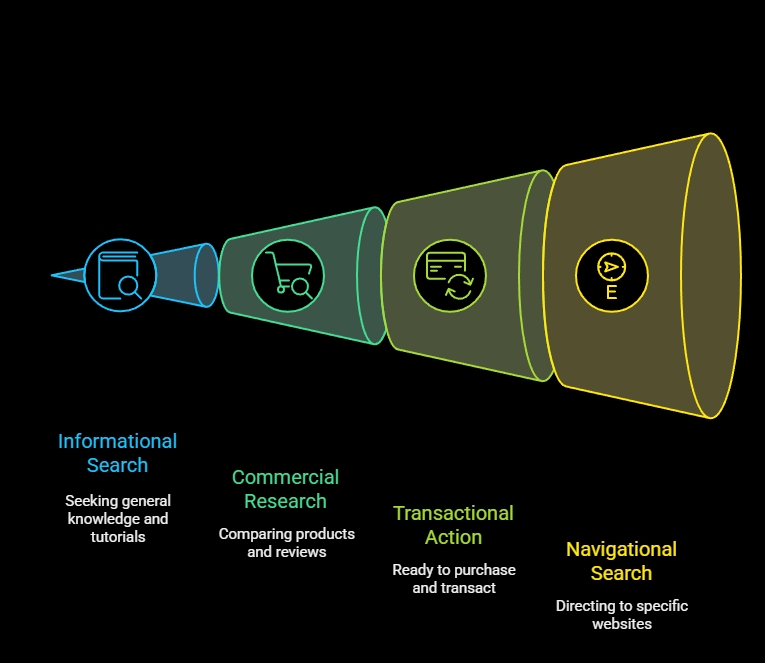
Normally people search on Google in this 4-team. Let’s talk about them.
- Informational (Know): The goal of these searches is to find precise answers. Usually, the user is searching for general information, tutorials, or how-to guides. This category includes, for instance, “how to fix a flat bike tire,” where the goal is to learn without necessarily buying anything.
- Commercial (PREP): In this stage, users are researching and comparing options. They might be looking for the best products, reviews, or sites. An example here is “best inner tubes for road bikes.” The intent is not yet to buy but to prepare and make a decision on which product or service is best suited for their needs.
- Transactional (DO): Users are now prepared to act because they have already acquired information. For instance, they research the best flat bike tire in the commercial phase after learning how to fix one in the informational phase. During the transactional phase, the user is actively looking for ways to purchase a flat bike tire and is concentrated on finishing the transaction. This illustrates a progression from learning to deciding what to buy.
- Navigational (GO): When a user is trying to find a particular website or brand, they conduct these searches. An example of a navigational search is “bikeparts.com,” which aims to take users straight to a particular website. People just want to go to the website or brand because they are aware of it.
Selecting The Perfect Keyword For Our Brand
Choosing the ideal keyword for your brand requires taking into account a number of important aspects. Selecting the best keyword for your brand requires a thorough process that considers all pertinent factors.
Brainstorming: At first, to pick a perfect keyword for our brand, we have to understand the motive of the keyword.
Consider that you are running advertisements for a blog that publishes educational content. You must concentrate on keywords with the intention of finding information or learning something in order to choose the ideal keyword for your brand.
In the same order, first you have to understand what you are doing for people. Then, according to your goods, you can select your keyword.
Brand terms: These are keywords that contain your brand name or trademarked terms. This could include your product, service, or company name.
For example, if your brand is Namecheap, users who search for “Namecheap hosting” are specifically looking for your brand. Brand terms are particularly useful for targeting people who are already aware of your business and are actively searching for your offerings.
If you are already a well-known business, then definitely you should take a keyword with your brand name. Because people will search with your company name for your goods.
Competitor Terms: These keywords concentrate on the names of your rivals’ brands that provide comparable goods or services to yours.
For example, if you work in the hosting business and Bluehost is your rival, someone looking for “Bluehost hosting” might also be considering your offering. These keywords can help position your offering as a viable substitute and draw in search traffic from consumers who are thinking about switching brands.
Generic Terms: Broader keywords associated with goods or services that don’t mention a particular brand are known as generic terms.
For instance, “hosting service” is a general term that anyone looking for hosting solutions may use. Despite their high search volume, these terms can be highly competitive. They are helpful for reaching a larger audience, especially those who are interested in your product category but may not have a specific brand in mind.
Simply put, generic terms are words or phrases that describe a good or service without mentioning a particular brand.
For instance, if someone needs hosting for their website, they might just search for “hosting service” rather than Namecheap or Bluehost.
Although a lot of people may search for these terms due to their broadness, many businesses may be aiming to reach them. They’re great for reaching more people who are just looking for something in your field, even if they don’t care which brand they choose as long as they need the service. However, this makes them harder to stand out with.
Related Terms: Related terms are words that are associated with your product or service but do not specifically describe what you are selling. If someone wants something similar to what you’re offering, they might look for these things.
For instance, if you sell web hosting, someone may look up terms like “website development” or “domain” because they have to do with creating a website, even though they aren’t the same thing. Therefore, they might still be interested in what you have to offer even if they don’t specifically search for “web hosting.”
Keywords Starting From: These are words or phrases that can assist people in finding what they’re looking for and begin with a particular word or concept.
Top: When looking for the best hosting services, people may search for “top web hosting.”
Cheap: If someone is looking for something reasonably priced, they could search for “cheap web hosting service.”
Best: If someone wants to know what the best option is, they might search for “best web hosting service.”
Price: If someone is searching for costs in a particular nation, they may type in “web hosting price in Bangladesh.”
Vs: To determine which is superior, someone may compare “namecheap hosting vs. bluehost hosting.”
Comparison: They could look up “web hosting service comparison” if they wish to compare.
Near me: When someone is searching for something nearby, they use the phrase “near me,” such as “web hosting near me.”
Affordable or Reasonable: When someone wants something that fits within their budget, they use the terms “affordable” or “reasonable,” such as “affordable web hosting.”
Keyword Generation for Google Ads Through Keyword Planner
We can use the Keyword Planner tool to find the perfect keyword for our Google Ads campaigns. It’s crucial to remember that Keyword Planner only makes related keyword recommendations. Knowing how to select the most pertinent and successful keywords for your advertisements is essential to success.
Understanding the purpose of the keywords is the first step in choosing the ideal keyword for Google Ads, as we’ve already covered. The four categories of keyword intent have already been discussed. Finding the intent type that best suits your objectives is the next stage. We can draw the most relevant traffic to our ads by determining the appropriate keyword intent.
Once you understand the keyword intent clearly, you can begin selecting the appropriate keywords. But when choosing your keywords, it’s important to consider other factors we’ve discussed. If your business is already well-known, for example, you can use “brand terms” because people may search for your brand name to learn more about your products. Understanding each of these points thoroughly will help you understand the importance of “Brand Terms,” “Competitor Terms,” and “Generic Terms” before you choose your keywords.
You can find even more effective keywords once you comprehend their structure. When used at the beginning, middle, or end of a keyword, words like “top,” “cheap,” “best,” “price,” and similar terms can greatly increase the keyword’s value and relevance.
Negative Keyword: You can use a negative keyword in your Google Ads campaign to prevent your ads from appearing for specific searches that aren’t related to your company.
For example, if you’re running an ad campaign for premium shoes, you might add “cheap” as a negative keyword. This way, your ad won’t show up for people searching for “cheap shoes,” which would attract traffic that’s not likely to convert into sales.
Also at the time of keyword selection, you have to select all of these things. Because sometimes if your keyword structure and the motive are good, it can still be a negative for your business. If you select a negative keyword, then you will just lose your money and not get anything good.
Now let’s go to the Google Ads to use the “Keyword Planner” to collect our targeted keywords.
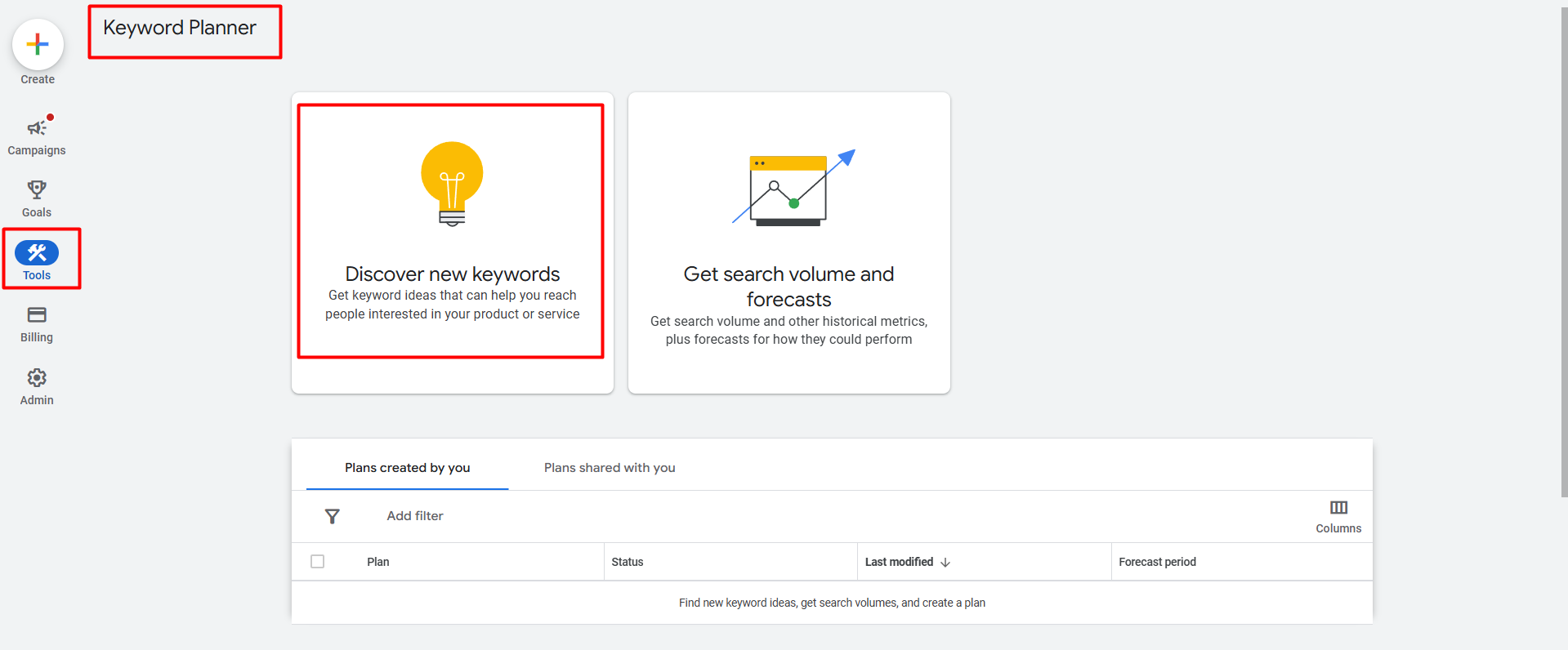
In Google Ads, click on the Tools. After that, get the “Discover New Keywords,” where we will research for our Google Ads.
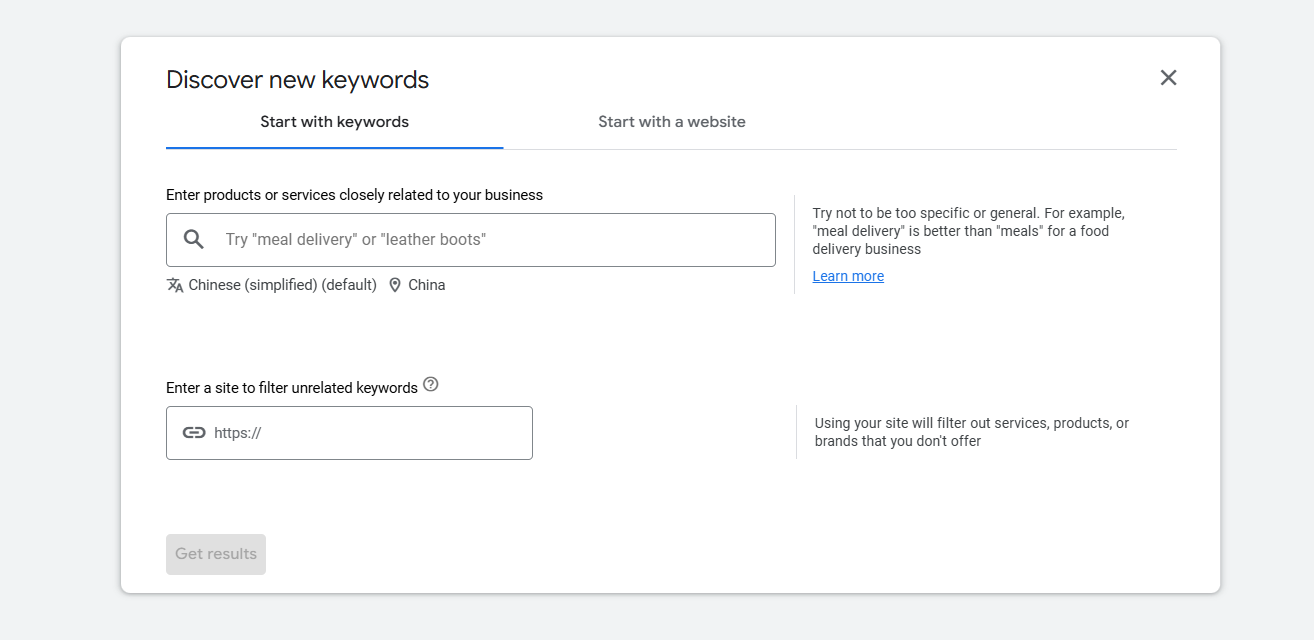
Here in the first position, you have to put some keywords to give ideas about your goods to Google Ads, or simply you can just use your website domain here in the next place. But we suggest using some keywords first to give ideas to Google.
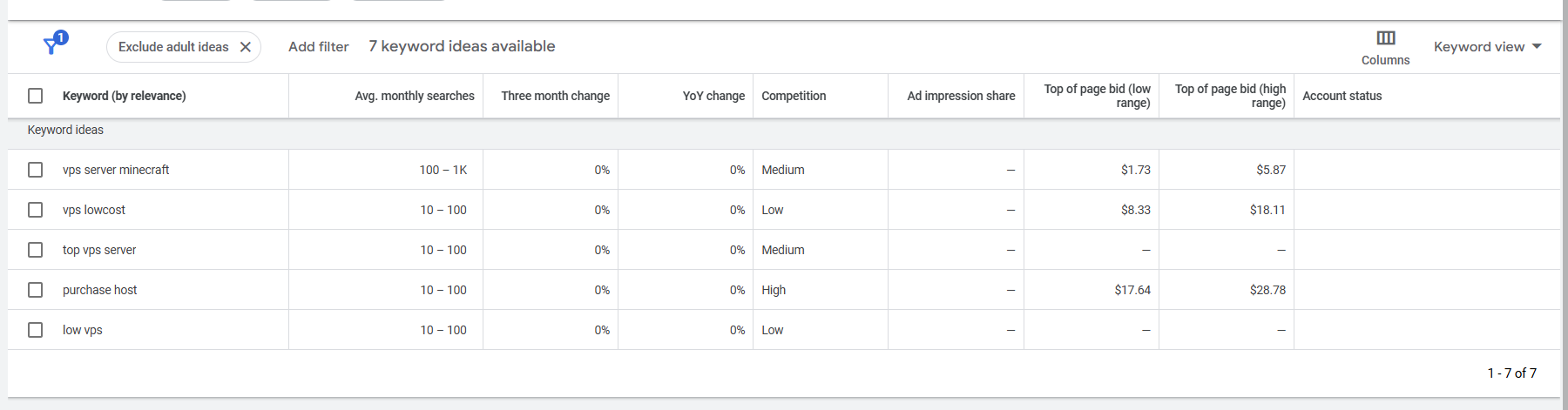
After searching some keywords, this is the view of your keyword list. Now from here you have to start collecting keywords according to the rules.
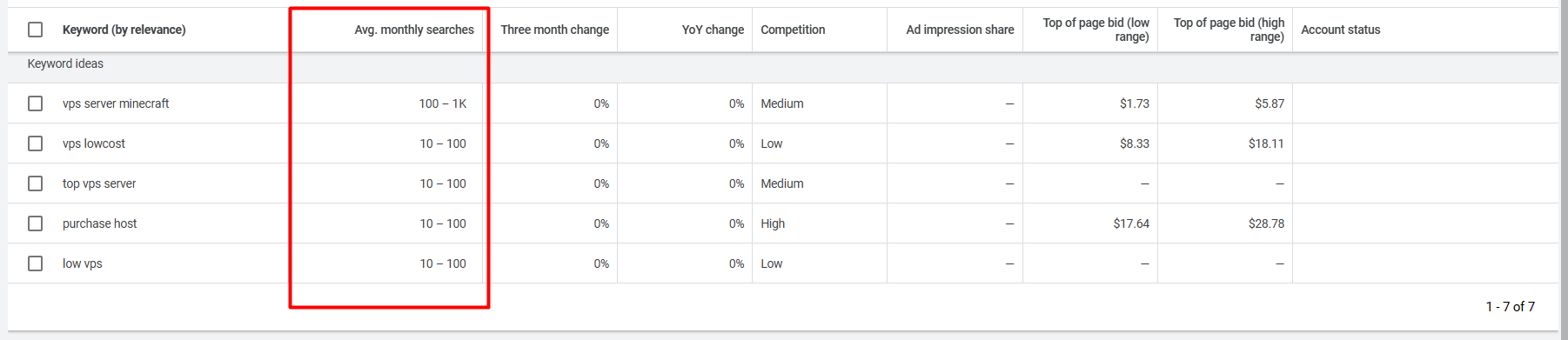
Avg monthly search: indicates the average number of times a keyword is searched for on Google each month. A high number for a keyword indicates that many people are searching for it. Few people look for it if it’s low.
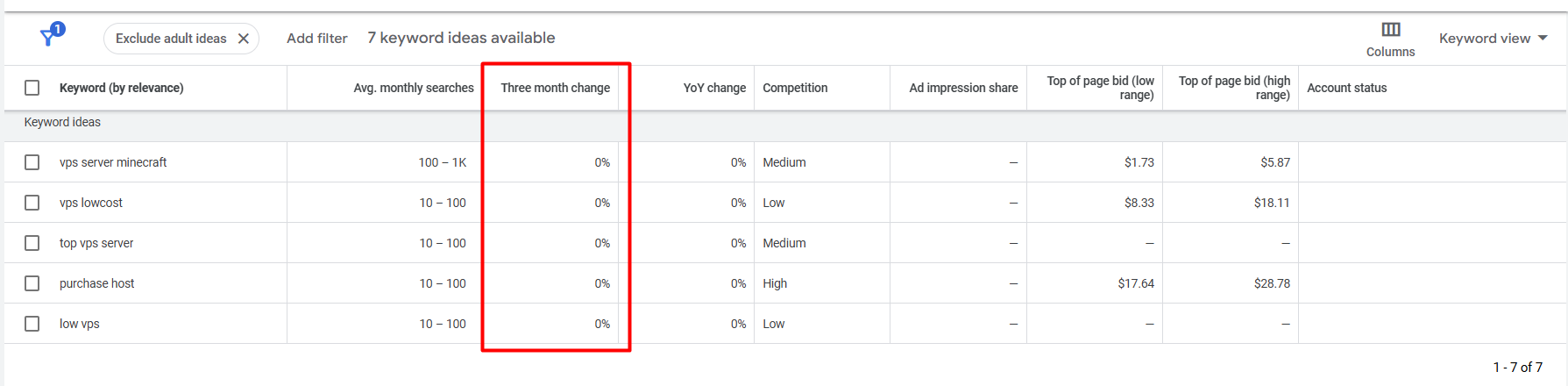
Three-Month Change: shows how much the search volume for a keyword has increased or decreased over the last three months.
YoY Change: It compares how much a keyword’s search volume has changed over the past year.
Competition: shows you the number of advertisers bidding on a particular keyword in Google Ads. It appears as:
- Low: Few advertisers are bidding on this keyword.
- Medium: Some advertisers are bidding on it.
- High: Many advertisers are competing for this keyword.
Ad Impression Share: This is how often your ad shows compared to how many times it could show.
Imagine there are 100 chances for your ad to show up. If your ad shows up 80 times, then your impression share is 80%.
Top Page Bid (Low Range): Is the price you may have to pay to have your ad show up at the top of the search results, but in the lower portion of that top spot.
Suppose you are placing a bid on the term “running shoes.”
- The Low Range Top Page Bid could be $1.50. This implies that if you bid $1.50, your ad has a chance to show up in the top section of the page, not necessarily in the first position.
- You may need to place a higher bid if you want to be in a better position; for example, your Top Page Bid (High Range) would be $3.00.
Top Page Bid (High Range): Is the amount you’d need to bid if you want a better chance of showing at the very top of the search results page.
We already know that it’s crucial to concentrate on a variety of keywords with low, medium, and high competition when you first start gathering keywords. With this strategy, we can efficiently control expenses. High-competition keywords can still be a good choice if low-competition ones aren’t accessible.
It’s imperative to always comprehend the keyword’s intent, though. Furthermore, monitoring monthly and year-over-year variations will provide us with insightful information about keyword performance. Keep in mind that depending on the purpose of the keyword, low or medium competition may actually be more advantageous.
It’s important to fully comprehend the landing page for your product before you begin gathering keywords for your company. This thorough comprehension will yield insightful information that will assist you in creating more pertinent and successful keywords that complement the objectives and target market of your product.