
A Google Ads account can get suspended quite easily, almost like catching a disease if you’re not careful. It can range from something minor, like a simple fever, to something much more serious, like a severe infection. That’s why doctors don’t just treat the fever itself but also prescribe medicine to address the underlying cause.
In the same way, a Google Ads account suspension cannot be fixed just by contacting Google support. First, we need to understand the real problem behind the suspension and then find the right solution for it. In this article, we’ll discuss 10 common reasons for Google Ads account suspension and the solutions to fix them.
A Google Ads account suspension almost always happens due to a violation of Google Ads policies. Since around 77–78% of Google’s revenue comes from advertising, Google has no interest in suspending accounts unnecessarily. However, when an ads account intentionally or unintentionally breaks any of Google’s core policy rules, Google takes action and may suspend the account.
Avoid These reasons
- Showing harmful, deceptive, scam, or low-quality ads to users.
- Putting the integrity and effectiveness of the Google Ads platform at risk.
- Breaking any law of the country in which the ads are running.
- Putting the trust of advertisers and users at risk.
There’s no need to panic. If you follow the solutions we share, around 80–90% of suspended accounts can be recovered. Only a small number of cases remain unresolved, usually when advertisers knowingly create complications or ignore the actual issue.
Now, let’s explore the top 10 reasons why Google Ads accounts get suspended, covering both common and uncommon issues.
- Policy Violation.
- Malware/security issue.
- Policy circumvents the issue.
- Billing or payment issues.
- Repeated policy violation.
- Miss Representation.
- Trademark infringement.
- Coordinated deceptive practices.
- Egregious Violations.
- Unauthorized access or account takeover.
So let’s go to explore everything one by one.
Policy Violation

For example, imagine you have an online pharmacy website where you sell medicines, but you don’t have the required certifications.
In this case, running ads can be a problem. Google has very strict policies about what types of ads are allowed and what are not, especially for sensitive industries like pharmaceuticals, gambling, or alcohol, which are not legal in every country.
Before running ads for such businesses, you must obtain the necessary certifications for your domain and submit them to Google through the support team.
Without proper approval, ads will not run. Additionally, advertisers must avoid misleading content, exaggerated claims, or inappropriate imagery. Since Google’s policies change frequently, it’s important to stay updated to avoid account suspension.
Malware/security issue

For example, imagine an eCommerce website that gets hacked. When users visit the site, their devices may be exposed to malware or security risks.
In such cases, Google may suspend the ads account to protect users and prevent traffic from being sent to an unsafe website.
Even if the issue wasn’t caused by the advertiser directly, it is still the advertiser’s responsibility to keep the website secure. To avoid this, your site should be regularly audited, cleaned, and protected from security threats.
Once all issues are fixed, you can contact Google support and inform them that the website is now safe. In some cases, the suspension may remain even after fixing everything, so you should request a manual review from Google support.
Policy circumvents the issue

This issue worries many website owners. For example, an advertiser creates a campaign, but all the ads get rejected because they don’t follow Google’s policies.
Instead of fixing the issue, the advertiser creates another campaign with the same type of ads, and those get rejected again.
Sometimes, they even try using a different campaign or domain to run the same ads. When Google detects repeated attempts to bypass its policies in this way, it may suspend the entire Google Ads account.
Policy circumvention means trying to work around Google’s rules instead of following them directly. It’s important to remember that Google’s review system is designed so that ads are reviewed, either automatically or manually, before and even after they go live.
If an ad violates policy, it may be rejected immediately or flagged later, which can eventually lead to account suspension. To avoid this, advertisers should first understand the rules of their industry, as many violations happen unknowingly. Make sure you are familiar with the regulations related to your domain and always follow Google Ads policies to stay safe.
For example, if you’re promoting a weight-loss product and make false or unrealistic promises, that clearly violates Google’s policies, and your ads will be rejected. In such cases, you can contact Google support, explain the mistake, and assure them it won’t happen again.
Google may remove duplicate accounts, delete the violating campaigns, and lift the suspension. However, it’s important not to try to outsmart Google’s system a second time, as repeated violations can lead to permanent suspension.
Billing or payment issues

For example, you may be running ads and add a payment card to your account, but the card gets declined for some reason, perhaps due to a bank server issue or insufficient balance. As a result, your ad spend cannot be charged.
In some cases, advertisers may also dispute the transaction with their bank, which leads to a chargeback. Google takes this very seriously because you already agreed to the terms and conditions when setting up the account.
Due to payment failures or chargebacks, Google may suspend the ads account. That’s why it’s important to ensure your card has sufficient balance before adding it and to avoid requesting chargebacks or refunds.
Repeated Policy Violation

Imagine an advertiser who repeatedly creates misleading ads and submits them for approval. When the ads get disapproved, instead of fixing the problem, they create a second Google Ads account and start running ads again.
While small violations may only result in ad disapprovals, that doesn’t mean creating a new account is the solution. If your ads are getting disapproved repeatedly, you should carefully review Google Ads policies related to your business.
This will help you prevent future disapprovals. Rather than opening a new account, it’s better to work with people who understand your industry policies and can create compliant ads. You can also study ads from similar businesses using the Google Ads Transparency Center, where you can view ads from any domain and learn how to structure your own ads properly.
Miss Representation
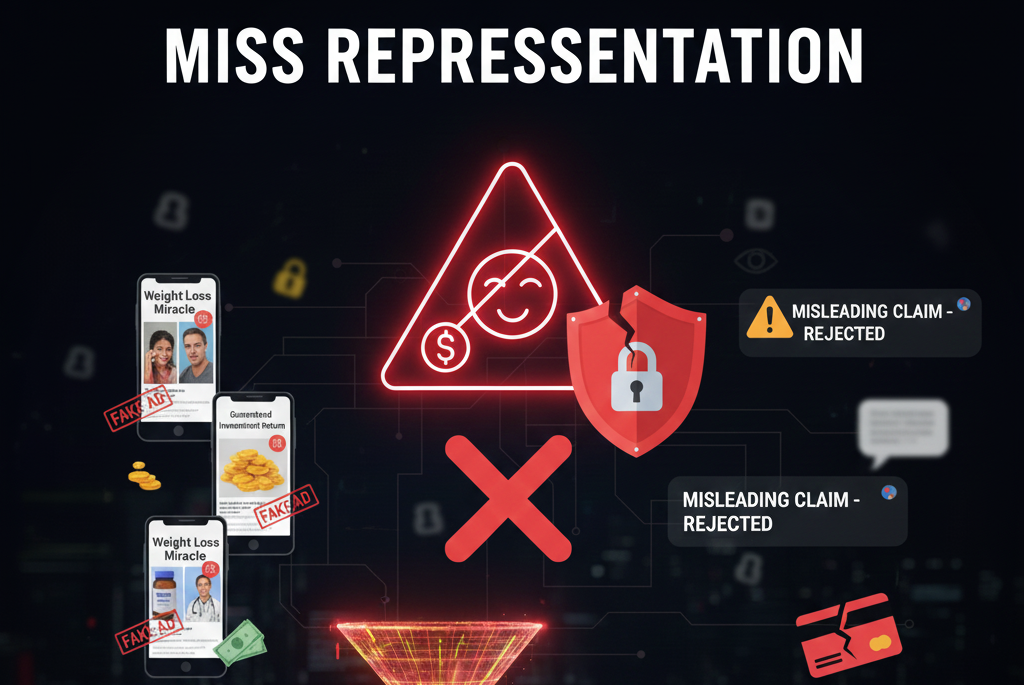
If an advertiser uses a brand’s name or logo in their ads or landing pages without permission, Google may suspend the ad account for violations.
In many cases, advertisers do this without realizing it or to indicate that they sell related accessories or provide repair services.
To avoid this issue, clearly state on your landing page that you are not the brand owner and that you only offer accessories or repair services.
This is crucial to avoid landing page disapproval. If you’re advertising as an authorized reseller and want to use a brand’s logo or name, simply contact Google support and provide proof of permission. After approval, your account can be whitelisted, and you’ll be able to run ads without trouble.
Trademark infringement

If you use another advertiser’s trademark, logo, or brand name in your ad copy or landing page without permission, your Google Ads account may be suspended, especially when the trademark owner files a complaint with Google.
This issue can also happen even if you are an authorized seller but haven’t contacted Google support to whitelist your account. The solution is simple: if you don’t have ownership or permission, remove all brand names and logos from your ads and landing pages. If you do have legal authorization, submit the required proof to Google support for verification. However, do not create a second Google Ads account, as it is likely to be suspended as well.
Coordinated deceptive practices

This means that when multiple Google Ads accounts try to promote the same product, service, or keywords in order to manipulate the auction, Google suspends all related accounts.
Google Ads is designed to give every advertiser a fair chance in the bidding process. Advertisers set their bids or bidding strategies, and Google then determines which advertiser is eligible to appear based on those settings.
However, if you create multiple Google Ads accounts to artificially increase bidding costs, block competitors from competing, or manipulate bidding prices for the same product or service, Google will suspend those accounts.
In reality, the majority of advertisers never do this. Only a small group of black-hat advertisers try to use such tricks.
Egregious Violations

If an advertiser uses Google Ads to promote illegal drugs, human trafficking, or any prohibited activity, the account will be suspended immediately.
There’s no solution here other than stopping such actions, because this goes beyond Google’s rules and can involve law enforcement.
Unauthorized access or account takeover

This happens when a Google Ads account is accessed from multiple locations within a short period of time.
For example, the account logs in from the USA and then, just a few minutes later, from Canada, followed by Africa or other regions using different IP addresses. Google may flag this as unusual activity and suspend the account for security reasons.
If you work with marketers from different locations, it’s safer to share account access through proper user permissions rather than sharing login credentials.
So at this point we have already explained a lot of ideas about the suspension. But at the end of the day, the best way to be safe from the suspension is to try to be updated with Google’s policy.